

Kozanitika Yaprakia
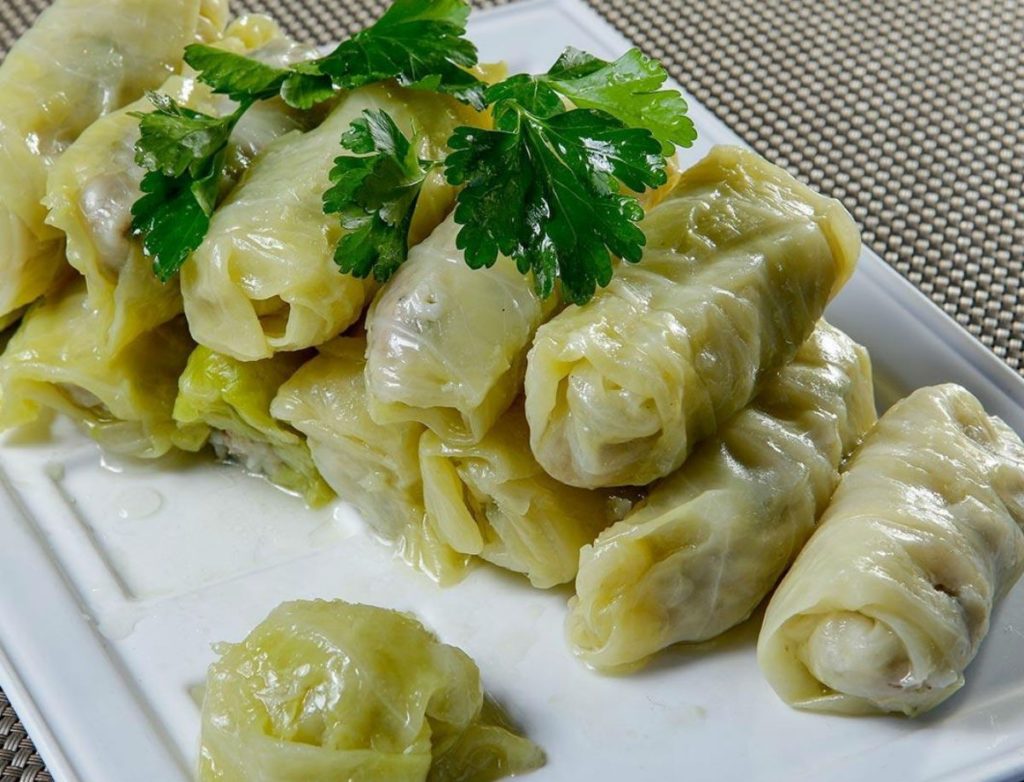
Τα γιαπράκια ή «λαχανοντολμάδες» στα … πρωτευουσιάνικα, είναι το απόλυτο φετίχ της κοζανίτικης κουζίνας! Είναι κυρίως χριστουγεννιάτικος μεζές -που όμως είναι επίκαιρος όλον τον χρόνο- γιατί συμβολίζει το φάσκιωμα του χριστού, έτσι όπως το λάχανο τυλίγει τον κιμά.
Ingredients:
Μισό κιλό κιμά χοιρινό και μισό κιλό μοσχάρι κατά προτίμηση ,χονδροκομμένο από την σπάλα ή την κοιλιά. Στα παλιότερα χρόνια η νοικοκυρά δεν έπαιρνε κιμά , αλλά κομμάτια κρέας και το ψιλόκοβε ή αλλιώς “στούμπιζε” σε μικρά κομμάτια με τσεκούρι.
– One fl. of brown rice glaze.
– Two large sweet onions grated or blended.
– A teacup of olive oil.
– Three-four glasses of armia juice (the water that becomes the armia).
– A tablespoon of sweet red pepper (and some bukovo, for those who like spicy).
– A cup of coffee sauce that we dilute in water (optionally).
– Ground black pepper to your liking.
– 15-20 allspice seeds (musk pepper).
– Salt (calculate according to how salty the broth is (cabbage and broth).
- Water, as much as needed, after the juice is finished to boil our yapraki and the juice of a lemon. Finally, add a tablespoon of phytin or olive oil.
Execution:
In a large bowl, pour the ingredients (except the spice) and mix them very well, until it becomes a homogeneous mixture.
We leave this mixture aside.
In another bowl, separate the leaves of the cabbage, keeping some thick leaves.
At the bottom of the pot we place small pieces of vine branches - or sticks from what we make skewers - and in between we throw the black peppercorns. Cover them with one or two of the thick cabbage leaves and start placing the yapraki on them.
Carefully take each leaf one by one, roll it up and place the yapraki in a circle, squeezing them tightly.
Όταν η κατσαρόλα γεμίσει λίγο πιο πάνω από την μέση , καλύπτουμε τα γιαπράκια με φύλλα λάχανου που έχουμε φυλάξει, προσθέτουμε το λαδί ή την φυτίνη κι από πάνω τοποθετούμε ένα ρηχό πιάτο για να μη μας διαλυθούν τα γιαπράκια. Τοποθετούμε σε χαμηλή φωτιά ρίχνοντας μέσα ένα ποτήρι αρμόζουμο.
Source kozaniguide.gr
 English
  Greek
Greek