

Places worth visiting
Western Macedonia is mainly a mountainous region, with most of its mountains exceeding 2,000 meters in altitude, and it is the only region of Greece that is not washed by the sea. The southeast direction of the region's boundaries is due to the main direction of the mountain complex of Pindos. The mountains Grammos, Smolikas and Tymfi at the western borders of the region form the first series of mountains that geographically separate the region from Epirus. The Prefecture of Kozani was one of the 51 prefectures of Greece, while since 2011 it is one of the 74 regional units of the country. It is located in the geographical division of Macedonia and is administratively subordinate to the Region of Western Macedonia. It had a population of 150,196 inhabitants, at the census of 2011. The prefecture is located at the crossroads between Central Macedonia, Epirus and Thessaly, and is the largest both in terms of area and population in Western Macedonia.
Climate
The climate of its area differs from the rest of Greece due to the altitude of the mountains and the morphology of the land with frequent basins. The climate of the region is characterized as temperate, with severe winters and mild summers, in contrast to the Mediterranean climate of coastal areas of the country. Because its plateaus have a southeast direction and no mountains intervene between them, the prevailing northerly winds keep the temperature low and create the conditions for several snowfalls in the winter months. Although the region of Western Macedonia belongs to the eastern continental part of the country which is characterized by less rainfall than the corresponding western part, the climate is more humid due to the combination of its mountainous landscape and lakes
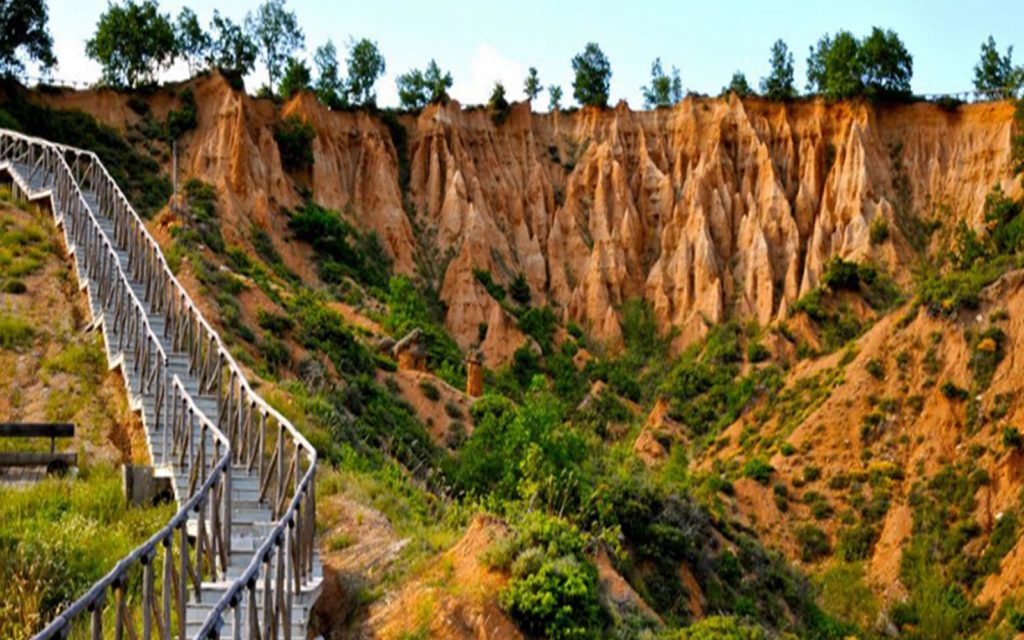
The "Fireplaces" in Mikrovalto
The impressive phenomenon of the geomorphological formations "Boucharia - Nochtaria" 40 kilometers south of Kozani, became the subject of an attempt to interpret through various myths. They are actually natural formations, which came from soil erosion that started 70,000 years ago. The "Boucharia" have the shape of an earthen column, which consists of sand, cobbles, marls, clay and a possible adhesive made of iron oxides and silicon dioxide, according to a recent report of the University of Athens. The top of these columns is covered by a slate rock, which played the role of an umbrella in the evolution of the formation. Their number exceeds twenty, while their height starts from two and reaches six and seven meters. The name of the site "Bukhari" comes from their shape, as "bukhari" in the local dialect means chimney.
The waterfalls in Velvedo
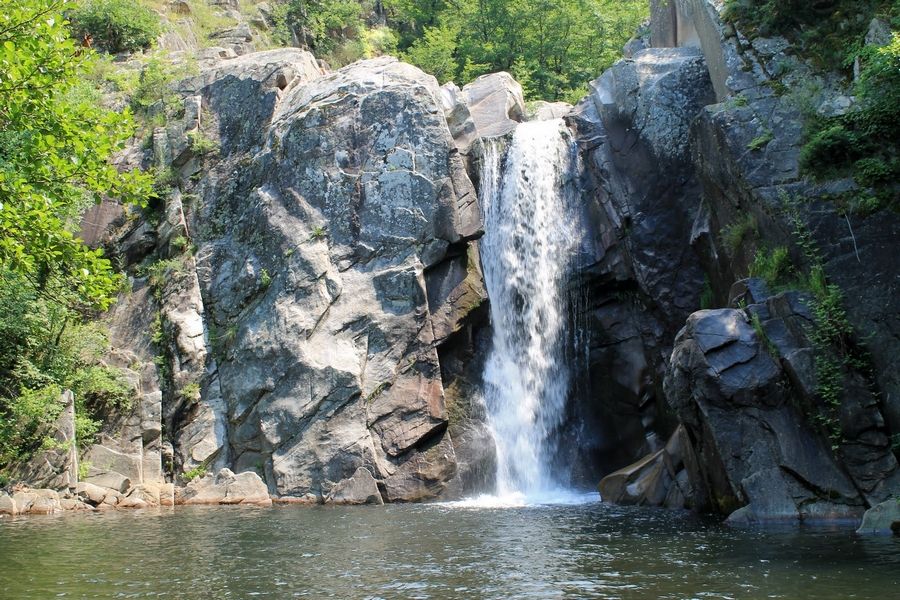
On the western slopes of Pieria, near Velvedo Kozani, one of the most beautiful gorges of Macedonia is developing, the Skepasmenou gorge, also known as the gorge of the nine Pierid muses. The name covered came from the fact that at one point of the stream that crosses it it is covered by the ground, while the name of the nine Pierid Muses came from the legend that said that the muses came down to the stream to bathe and dance. The total length of the canyon is about 7 kilometers, it starts from the Polyfytou lake at an altitude of about 290 meters and ends at the village of Katafygi at an altitude of about 1450 meters. Along the entire length of the canyon, the visitor can admire over ten waterfalls that create the corresponding small lakes and ruins of old watermills. In addition to the rich flora, the Skepasmeni gorge also has a rich fauna. The avifauna is particularly rich as it is enhanced by the neighboring artificial lake Polyphytos, also several species of amphibians and reptiles live in the gorge while there is also the presence of over ten species of mammals.
The stone bridges in Voio
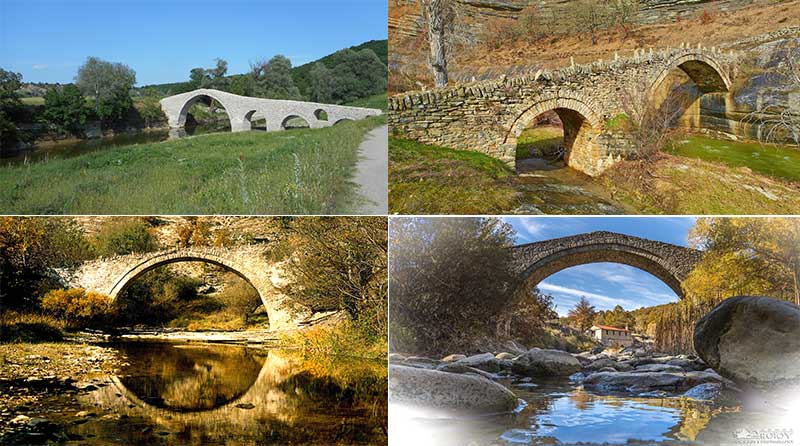
Voio is one of the characteristic regions of Greece where there are concentrated stone bridges, which are even recognized as rare art. There are over 20 stone bridges here, all built by local craftsmen. They are built scattered in proper studied locations in different periods of Turkish rule, each with its own history, legends and identity. Single-arched, double-arched, or multi-arched, they vary in form and size as Pramoritsa becomes wider as it descends into the mountain ravines. They are living monuments of the era of flourishing mobile livestock farming in Northern Pindos when the mountain settlements were alive with life.
The castles in Servia
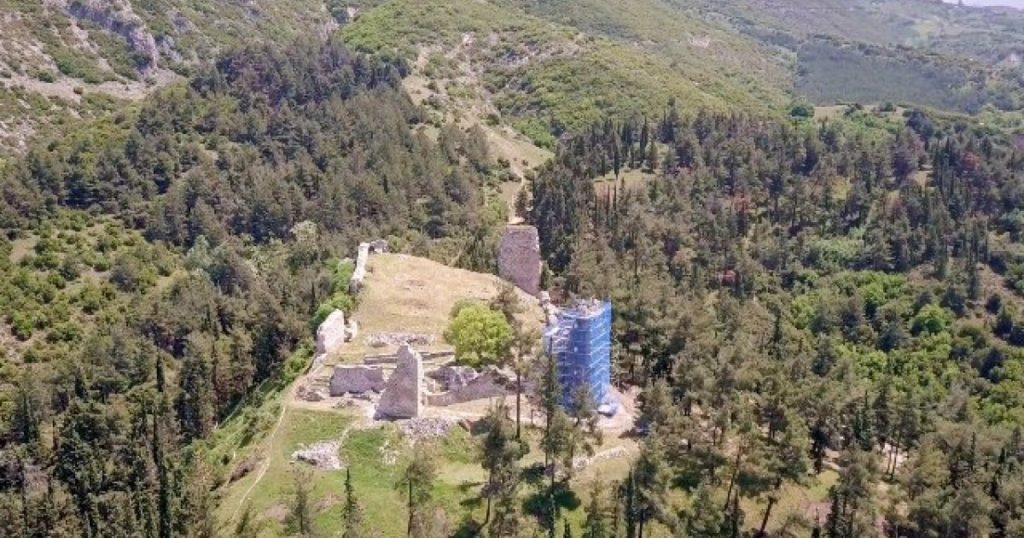
The Castle of the Serbs was built somewhere between 560 and 650 AD, that is, in the years of Justinian or Heraklion. Most of the fortification that is preserved today dates back to the Middle Byzantine era (11th-12th century). However, in parts of the walls, phases of the early Byzantine years (6th-7th century) were identified as well as phases that can be associated with the Macedonian fortress reconstruction and repair program implemented by the emperors Leo V the Armenian (813-820) and Romanos Lekapinos (959-963). The castle is located at the western foothills of Pieria. It is built in the most important, fortified position, as it controls the passage from Macedonia to Thessaly and Southern Greece through the straits of Sarantaporos.
Neraida overlooking the Polyfytos lake
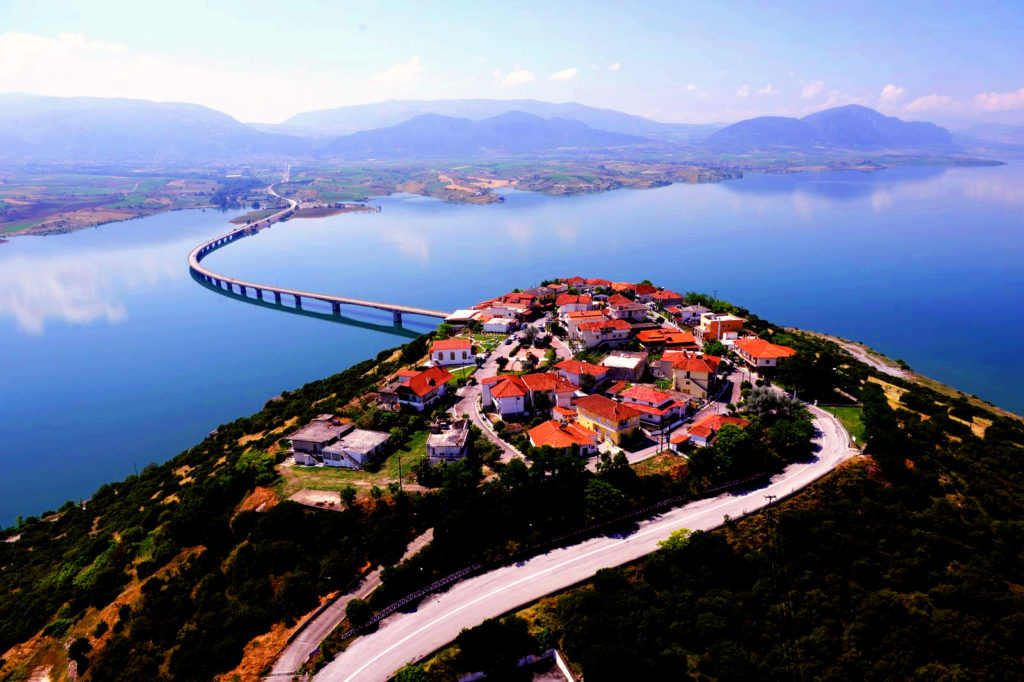
The beautiful Neraida in the prefecture of Kozani is an ideal destination for day trips, as it is very close to other popular destinations. Take a walk through the streets of Neraida and enjoy the nature and the unique view of the lake and the famous bridge of Servia. The Polyphytos Lake Bridge is one of the longest bridges in Greece with a length of 1,372 meters. It was inaugurated in 1975, when the artificial lake of the Polyphytos dam was created, on the Aliakmonas river. The works for its construction began in 1972. Next to the bridge and the headquarters of the Kozani Maritime Club, a marina has been created, while the view from the village of Neraida Kozani, whose hotels, taverns and cafes, are a favorite place of recreation of the Kozanites, but also of many other Macedonians.
The archaeological site and the Museum in Aiani
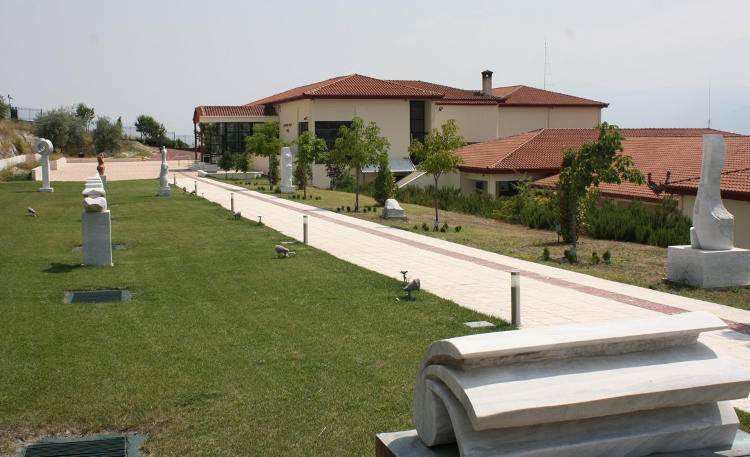
The Archaeological Museum of Aiani is a museum in Aiani, Kozani, in the Western Macedonia Region of Greece. Although the museum was inaugurated in 1970, with a collection of antiquities of the ancient city, in 1983 some important additional finds meant that the museum had to be significantly expanded to house the new objects. Construction of a new museum began in 1992 but was delayed due to events such as the earthquake on March 13, 1995. After being stored in various places, including the town hall, the museum was finally completed in 1997, but only two of the museum's exhibition halls opened in October of 2002. The Archaeological Museum of Aianis, now housed in a two-story building, presents the history of ancient Aianis, the capital of Elimia, which was one of the most important kingdoms of Upper Macedonia. Important collections include findings from the Late Bronze Age (1500 – 1200 BC) and the Archaic and Classical periods (600 -500 BC), which provide an important insight into the formation of the Doric-Macedonian peoples in the region and urban and political development of Aenia, especially during the sixth century BC.
The mansions and churches of Siatista
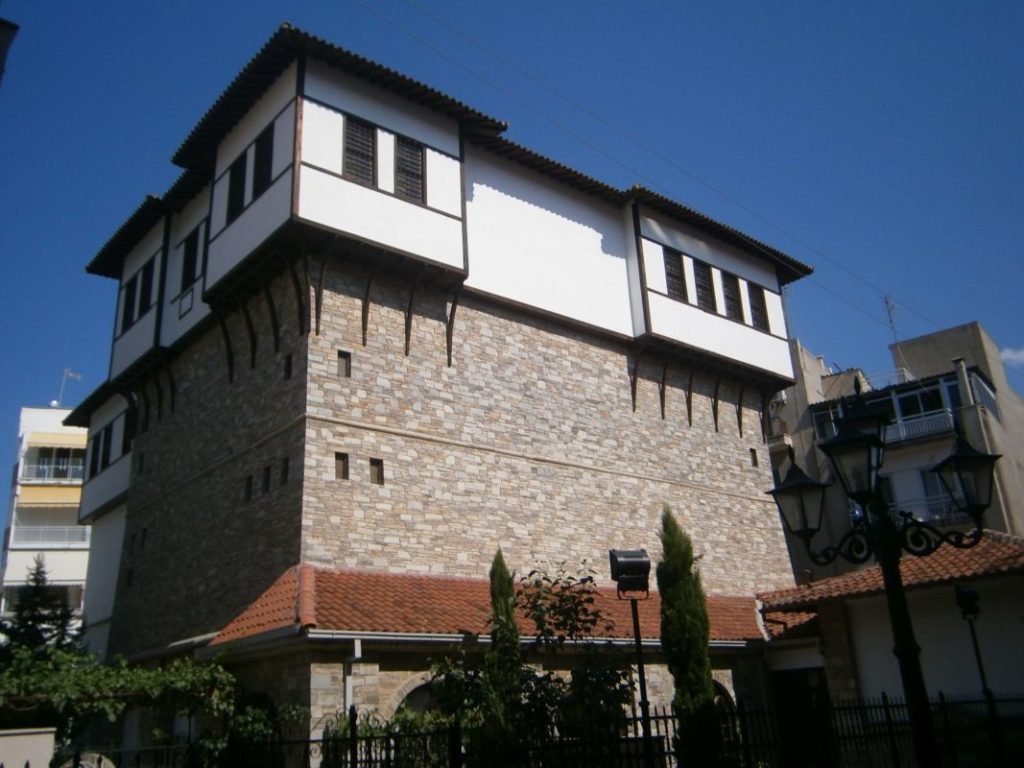
The city of Siatista is located southwest and at a distance of 27 kilometers from the city of Kozani. Few regions of Greece can boast of their cultural identity and architectural uniqueness, like Siatista in the heart of Western Macedonia.
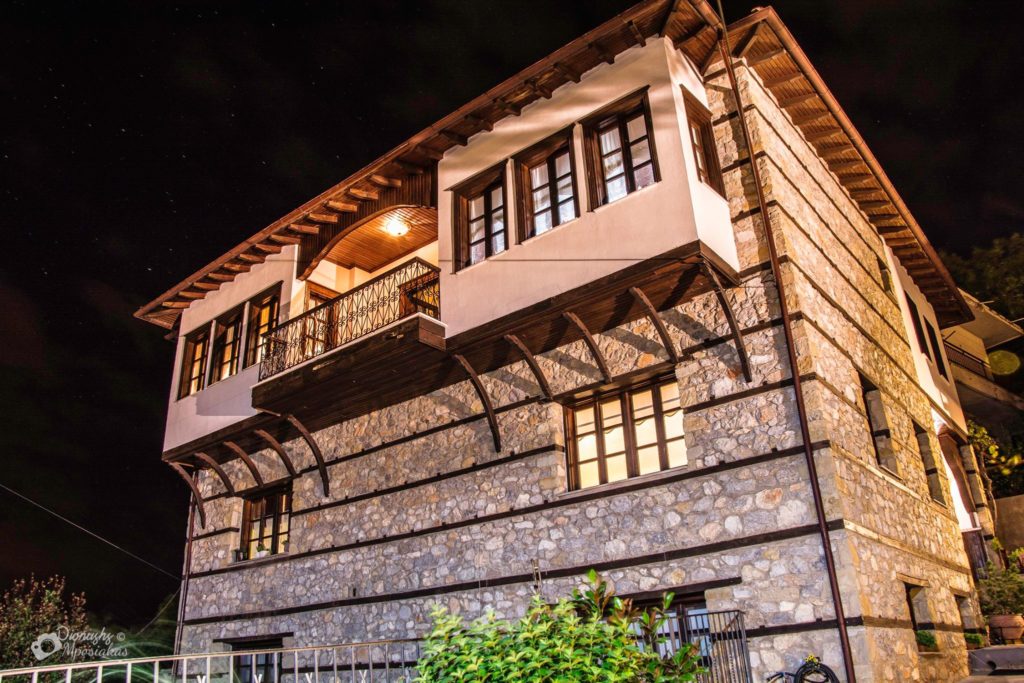
Siatista, although it occupies an isolated position in Western Macedonia, has been, since around 1600, a notable craft center. Its inhabitants are engaged in weaving, fur production, dyeing art and viticulture. At the same time, a trading activity of the Siatistines to the Ioannina begins, which in time expands to the north, Venice, Russia and more to Central Europe, Budapest and Vienna. The mansions of Siatista, typical examples of 18th century architecture, were built by wandering guilds (synafia) of Epirotian and Macedonian craftsmen. About thirty of them are still preserved today.
There are many churches and chapels that the visitor will meet in the area and whose roots are lost in the depths of time. Another old and beautiful church is that of Prophet Ilias, almost in the middle of the two districts. It was built in 1701 and renovated in 1740. Of interest are the representations of the creation of Adam, the Second Coming and the root of Jesse with the ancient philosophers, a theme not common in Christian temples. The corresponding depiction in the church of Saint Paraskevi reveals the flourishing of letters at that time in Siatista
The Koventarios Municipal Library
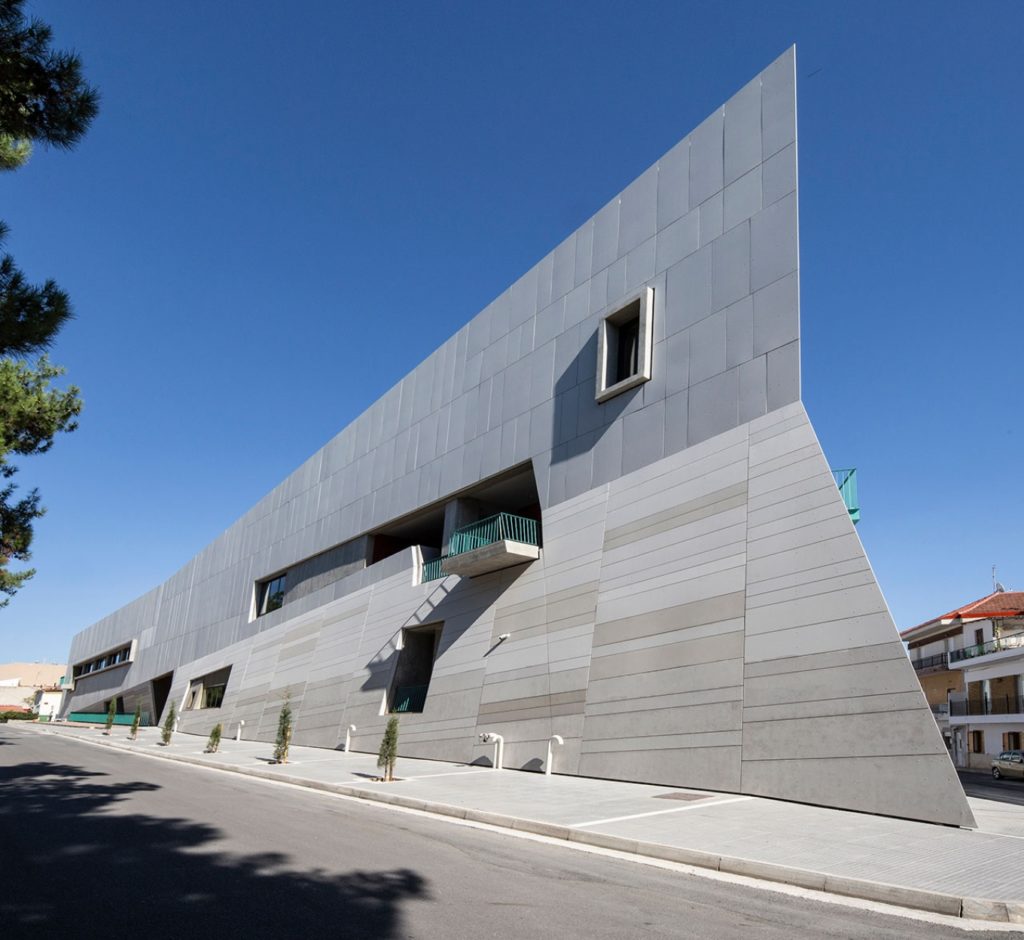
The "Koventarios" Municipal Library of Kozani (KDBK), is a library with a rich and long history, the study of which helps us to understand, above all else, the role played by the book, as a tool of knowledge, in the lives of local residents and to get to know their educational and social level, but also their interests in different periods of time. Kozani is justifiably proud of its library, which is among the most important libraries in Greece, mainly due to the large number of old books it contains, manuscripts, archival material and the volume of its modern collection.
The Historical-Folklore & Natural History Museum
The Historical-Folklore & Natural History Museum of Kozani was founded in 1969 and was officially inaugurated on October 10, 1987. The Museum is a creation of the Association of Letters and Arts of the Prefecture of Kozani. The History-Folklore and Natural History Museum belongs to the category of History-Folklore Museums. It is located in the city center. It includes the following thematic categories: Natural History Exhibition (from the Paleolithic era to modern times), Archaeological-Byzantine Exhibition (from 7000 BC to 1453 AD), Historical Exhibition (from 1453 to 1944) , Folklore exhibition, which is also considered the most important, (from 1640 to 1960), Gallery of modern times, Stamp collection (1861-2004) and Radio collection (1930-1960).
Vlasti Eordeas
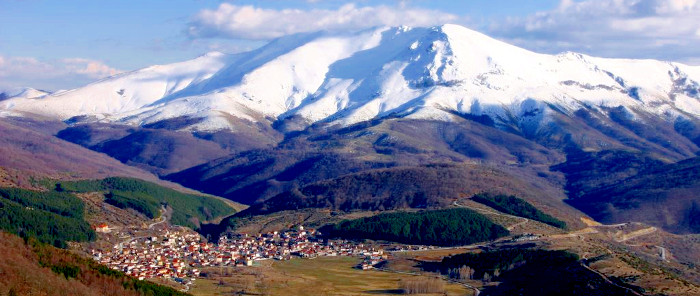
Vlasti is a village that extends in the wider region of Eordaia. It is located at an altitude of 1245 meters between Mount Askion and Mount Muriki. It has rich natural beauty and the main thing is that it is one of the most historic and also one of the biggest attractions in the area of Eordaia. The "live" side of the village is the summer side. The concentration of Vlatsians in the village, as well as the natural beauty of the area, favor the realization of various cultural events. Also, every Fifteenth of August the feast of the Virgin Mary is celebrated with special splendor. The festival lasts three days.
The Paleontological Museum of Ptolemais
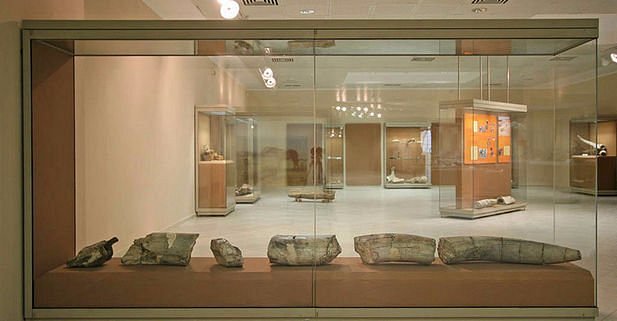
An important asset of Ptolemaida is its Paleontological & Historical Museum, which was inaugurated in 2006 and is not limited to the narrow sense of the term, but also produces culture. Inside this beautiful building, not only paleontological and historical exhibits are housed, but also a gallery wing with important works of Greek Painters such as Moralis, Mytara, Fasianou, Pantaleon, Karavoussi Zoumboulakis and others. Of exceptional importance is the section of Pavlos Moschidis who donated 100 paintings to the museum as well as his entire archive. In the Museum there is still a section with archaeological findings and a folklore collection. At the same time, exhibitions of all kinds are hosted. The Paleontological Collection of the Museum was formed, almost entirely, from voluntary offerings of the residents of Eordaia.
Kozani Carnival (Apokria) and Fanoi
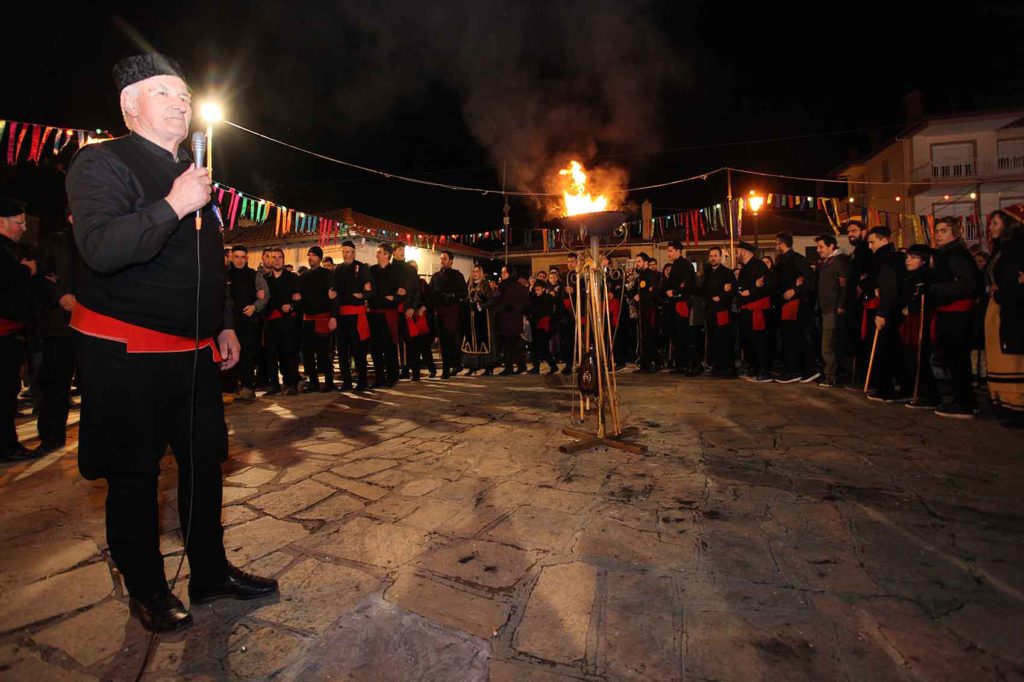
The Kozani Carnival is a network of customs that has not yet exhausted its potential, as it has flexibility and the ability to adapt to the conditions of each new season. Its core and focal point is the Fanoi, a festive bonfire that has been lit at the crossroads of the city for centuries, proving the durability of the custom and its deep roots in the hearts of Kozanites, who cannot imagine Halloween without it.
What makes it so special is the Fanos, the purifying bonfire around which a nightly outdoor party is set up.
The community or group participating in such a ritual event "seeks the realization of a purpose, which is usually the attainment of auspiciousness, the good year, in its broadest sense, in the sense of abundant fruitfulness and good health."
So the peasants of Kozani danced around the fire, exorcising evil spirits and calling on the forces of good to help them in their difficult task. The movements and steps of their dance were passed down from generation to generation the same and unchanged, restrained and monotonous, accompanying the song rather than independent dance movement patterns.
 English
  Greek
Greek